Kategoriarkiv: Okategoriserade

Su éxito en diversas otras actividades deportivas

Los conos de fútbol también pueden ser un producto excelente, ya que ayudan a los jugadores a simular los ejercicios que ven en la técnica. Existe una gran variedad de dispositivos en el mercado, pero la clave reside en elegir aquellos que permitan al jugador practicar las habilidades que usará en el juego.

Hay muchas marcas para elegir tus botas. Cada marca es muy diferente; ADIDAS es una de las más populares. Si bien Under Armour se considera una marca de fútbol, ​​recientemente se ha abierto camino en el mercado gracias a su éxito en otros deportes.

Gracias a sus ingredientes excepcionalmente saludables, el vendedor puede optimizar su inventario y reducir sus precios, ofreciendo una mejor oferta en ropa, camisetas, botas y más de alta calidad.

1) Identifica el tipo de fútbol en la zona. Los tacos de fútbol Nike Mercurial Superfly X FG, tanto interiores como exteriores, varían según su idoneidad para la superficie de juego.

Los porteros usan pantalones cortos o largos con amortiguación en las caderas. Esta amortiguación previene lesiones por las innumerables veces que se lanzan a por el balón durante un partido.

Si te gusta correr mucho, tus zapatillas para caminar no son lo suficientemente buenas. Necesitarás un calzado que ofrezca soporte para el tobillo.

Dado que los tacos de acero suelen ser ilegales porque representan un riesgo para otros jugadores, suelen ser de plástico moldeado. Los tacos de plástico tienen un relleno redondeado que proporciona una excelente sujeción en el barro vigoroso de la base. El calzado de fútbol americano puede tener tacos de plástico y de acero, mientras que el calzado de golf tiene tacos de acero.

Por último, ¡anímate a hacerlo! ¡Comprométete con tu magia! En el cuerpo humano es nike mercurial un excelente factor para resistir aquí.tu Marvel.así que dedícate a ello.

Rezultati Ballon d’Or: Ousmane Dembele iz PSG-ja in Aitana Bonmati iz Barcelone sta osvojila nagradi in se vpisala v zgodovino

Ousmane Dembele iz Paris Saint-Germaina in Aitana Bonmati iz Barcelone sta v ponedeljek v Parizu osvojila nagradi Ballon d’Or v moški in ženski konkurenci, s čimer sta se oba zapisala v svojo zgodovino.

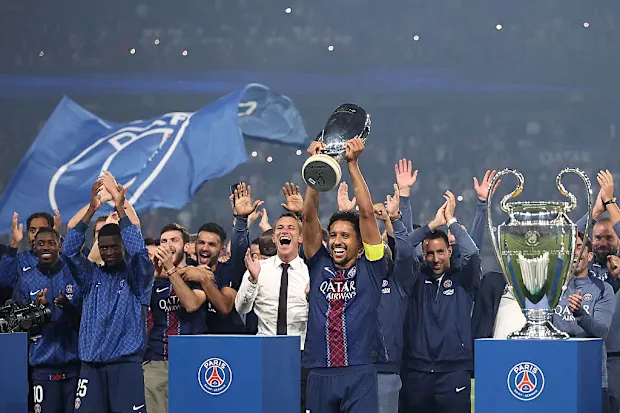
Dembelejev triumf je bil osrednji dogodek uspešnega večera za Nogometni dresi PSG, saj sta dva druga člana njihove ekipe, ki je osvojila Ligo prvakov UEFA, domov odnesla individualni priznanji, klub pa je osvojil nagrado za moški klub leta. Dembele je bil tedne pred slovesnostjo favorit za Ballon d’Or, a ko je prevzel nagrado, je bilo to v bistvu praznovanje presenetljive poti, ki jo je ubral na odru. Napadalec je bil večji del svoje kariere stranski lik na elitnih ravneh nogometa, a je bil ena od zvezd v zgodovinski sezoni PSG-ja, saj je v sezoni, v kateri so osvojili trojko, dosegel 35 golov v vseh tekmovanjih.

Bonmatijeva je medtem že tretje leto zapored osvojila Ballon d’Or, kljub porazu Barcelone v finalu Lige prvakov UEFA in porazu Španije v finalu ženskega evropskega prvenstva. Je prva ženska, ki je osvojila tri zaporedne trofeje Ballon d’Or, in šele tretja igralka, ki ji je to uspelo, pred tem sta to storila Argentinec Lionel Messi in Francoz Michel Platini.

Favorit domov odnese najprestižnejšo individualno nagrado, na veliko navdušenje množice, Nogometni dresi za otroke ki je skandirala njegovo ime, preden ga je Ronaldinho prebral, in se ob prevzemu trofeje razplamtela. Čast ga je prevzela, saj je večkrat uporabil besedo ”izjemen” in omenil Ronaldinha, preden se je zahvalil. ”Izjemen” je primerna beseda – Dembele je bil v bistvu stranski igralec v elitni ligi, a je postal zvezda šova za novo preoblečeni Paris Saint-Germain, ki je užival v najboljši sezoni v karieri s 35 goli v vseh tekmovanjih in nato še trojko.

To je morda največje presenečenje slovesnosti! Igralka Barcelone in španske reprezentance Aitana Bonmati je osvojila svojo tretjo zaporedno Zlato žogo, kar pa ni bilo gotovo, saj to nagrado običajno prejmejo igralke, ki so osvojile veliko lovoriko na klubski ali reprezentančni ravni. Edina igralca, ki sta pred njo osvojila tri zaporedne trofeje, sta bila Lionel Messi in Michel Platini, in pravi, da o tem kot otrok ni sanjala zaradi zgodovinsko premajhnega vlaganja v ženski nogomet. Pravi, da so ona in njene kolegice po vsem svetu ”več kot nogometašice” in da lahko mlada dekleta danes sanjajo o tem, da bi dosegle vrhunce športa na način, ki ga ona ni mogla.

From tradition to innovation: The history of football shirts

Introduction

Football jerseys are far more than just sportswear. They reflect the identity of a club, the passion of its fans, and the evolution of the game itself. From the simple cloth shirt of the early days to the high-tech materials of modern jerseys, each shirt tells a story that combines tradition and innovation.

1. The Beginnings of Football Jerseys

In the early years of football, jerseys were primarily practical and simple. Teams wore simple shirts made of cotton or wool, which primarily served to distinguish teams. Comfort and freedom of movement were less important; the material was heavy and often damp as soon as the players started to sweat or it rained.

The colors of the jerseys had a special meaning. They not only served as a means of identification on the field but also symbolized club affiliation and fostered fan loyalty. In some cases, the shirts were even hand-sewn or produced in small batches, making them unique pieces.

In addition to their functionality, the Cheap Football Shirts already reflected the values ​​and traditions of the clubs. They were a visible sign of belonging and helped strengthen cohesion within the team. In this early phase of football, jerseys laid the foundation for later developments in design, materials, and customization that give today’s jerseys their modern character.

2. Developments in the 20th Century

In the 20th century, football jerseys underwent a significant transformation, affecting both function and aesthetics. With the professionalization of the sport, jerseys were standardized to ensure uniformity within teams. The cut and fit improved, allowing players greater freedom of movement and a more dynamic game.

A significant step was the introduction of sponsor logos on jerseys, which not only influenced the design but also increased the commercial importance of the shirts. Teams began to view jerseys not only as playing clothes but also as a marketing tool. At the same time, the idea of ​​uniform club colors and designs took hold, making jerseys symbols of a club’s identity. To learn more about the kit, visit wcfootballkits.co.uk.

Furthermore, jerseys evolved from purely practical garments to an emotional connection between players and fans. The combination of improved materials, distinctive club colors, and emerging merchandising made the jersey a coveted collector’s item. During this period, the foundations for modern jerseys that combine both performance and style were laid.

3. Technological Innovations

With the advent of modern technologies, football jerseys underwent fundamental changes. New materials such as polyester, mesh, and high-tech fabrics replaced heavy cottons, creating lighter, breathable jerseys. These innovations enabled players to stay dry even under intense play and maximize their freedom of movement.

Furthermore, technical improvements such as moisture-wicking, temperature-regulating fabrics, and ergonomic cuts led to improved match performance. Jerseys became not only more functional but also more durable and easier to care for. The combination of material technology and design made it possible for jerseys to support comfort, style, and performance simultaneously.

During this phase, digital technologies also began to make their way into the world of football jerseys. Sensors and smart textiles opened up new perspectives for performance analysis and training. Technological innovations in the jersey sector thus laid the foundation for the modern fusion of sport, science, and design, which is now a given in professional football.

4. Design Trends and Fashion Influences

In addition to functionality and technology, the design of football jerseys has become increasingly important over time. While early jerseys were simple and practical, the appearance of modern shirts has developed into an important stylistic element. Striking patterns, contrasting colors, and creative details reflect not only the club’s identity but also current fashion trends.

Retro jerseys have experienced a renaissance, especially among fans. Old designs are reissued to evoke nostalgic memories and honor the club’s history. At the same time, pop culture, streetwear, and international fashion trends influence the design of modern jerseys. Designers combine tradition with contemporary style, making each jersey not only functional sportswear but also a fashion statement.

This fusion of sport and fashion demonstrates that football jerseys today go far beyond their original purpose. They are an expression of creativity, club identity, and cultural relevance, both on the pitch and in the everyday lives of fans.

5. The Role of Fans and Personalization

Football jerseys are no longer just clothing for players on the pitch. They have become an important means of expression for fans. Fan jerseys allow supporters to visibly demonstrate their identification with the club, whether in the stadium, in everyday life, or at public events.

Personalization plays a key role in this. Names, numbers, or limited editions give jerseys a unique touch and create a close emotional bond between fans and the club. These customizations not only increase the desirability of the jerseys but also promote the merchandise business, which is an important source of income for many clubs.

The interaction between fans and jerseys goes beyond simply wearing them. Jerseys become symbols of loyalty, memory, and belonging. They connect supporters across generations and help ensure that football is not just a sport, but a cultural experience.

6. Sustainability and the Future of Jerseys

In recent years, sustainability has increasingly become a focus of football jerseys. Clubs and manufacturers are increasingly relying on environmentally friendly materials such as recycled polyester and organic fabrics to conserve resources and reduce their ecological impact. Production processes are also being made more efficient to minimize energy consumption and waste.

At the same time, digital technologies are opening up new possibilities for the future of jerseys. Smart textiles that, for example, record players’ vital data or analyze performance could soon become an integral part of professional team kits. Customized and limited digital editions for fan jerseys are also conceivable, combining sustainability and innovation.

The future of football jerseys will therefore be shaped by two strands: on the one hand, by the responsible use of resources, and on the other, by the integration of new technologies that increase functionality, comfort, and interactivity. Modern jerseys thus combine tradition, identity, and progress uniquely.

Conclusion

The history of football jerseys shows how the sport has evolved in terms of design, materials, and function. From the simple shirts of the early days to standardized jerseys of the 20th century to high-tech textiles and innovative designs, jerseys reflect the balance between tradition and progress.

They are not just playing clothes, but an expression of identity, style, and belonging. Fans shape their meaning through personalization and wear them as a symbol of their loyalty. At the same time, sustainable materials and digital technologies open up new perspectives for the future without losing touch with the club’s history.

Football jerseys thus connect past, present, and future. They are a unique symbol of how sport, culture, and innovation go hand in hand and remain a central component both on the pitch and in the world of fans.

Omar Marmoush reveals the Premier League’s toughest opponents

1. Introduction

Omar Marmoush, the rising Egyptian striker, joined Manchester City in January 2025. His views on the Premier League’s toughest opponents are of interest to fans and pundits alike. In this article, we will review Marmoush’s experiences and assessments of the most challenging players on the pitch.

2. Marmoush’s first impressions of the Premier League

The Premier League is known for its speed and physicality. Marmoush has adapted quickly to his new environment and has been able to show his talent immediately. The first few matches have allowed him to familiarise himself with the demands of the league, and he has managed to score goals and provide effective assists.

3. Toughest opponents on the pitch

Marmoush has named a few players who have made the biggest impression on him. For example, Mohamed Salah is one of the players he admires, while the Chelsea stars have proven to be very challenging opponents. According to Marmoush, these players constantly challenge him and improve his own game.

4. Marmoush’s own style of play and tactics

Marmoush uses his speed and precise finishing to overcome opponents. He plans his play carefully and tries to find space between defenders. His ability to read the game helps him successfully face the toughest players in the league.

5. Reactions from fans and experts

Manchester City fans are excited about Marmoush’s performances and his assessments of opponents. Football experts are closely watching how he develops and how his views compare to the experiences of other players.

6. Future prospects

Marmoush intends to continue his development and face future challenges in the Premier League. His goal is to develop into a more versatile striker and make a significant impact in the Manchester City ranks.

7. Summary and Conclusions

Omar Marmoush’s views on the Premier League’s toughest opponents offer an interesting insight into the player’s thoughts. His experience, analysis and future plans make him one of the most followed strikers in the league.

If you want to follow Marmoush’s performances and show your support, you can buy his Manchester City shirt here at wcfootballkits.co.uk and be part of the team cheering for the team at every match!

Lottning till Champions League 2025-26: Barcelonas potentiella ligamotståndare

Barcelona var det mest imponerande laget inför sin Champions League-debut, men trots sin inhemska framgång fortsatte de att kämpa på kontinenten förra säsongen.

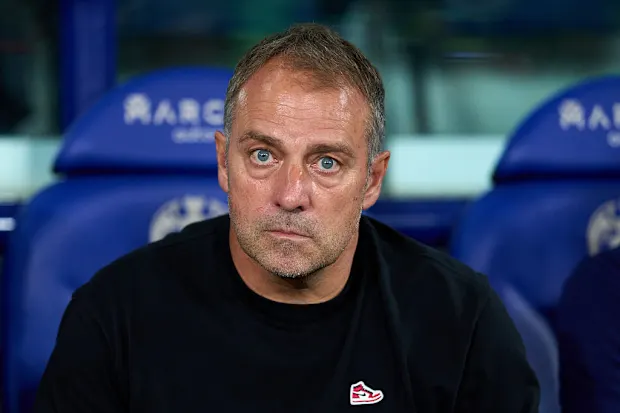
Hans Flick vann tre troféer i sin managerdebut, men hans lag förlorade Champions League med knapp marginal efter en exempellös semifinalförlust. Billiga Fotbollströjor Inter Milan utnyttjade sitt momentum, chockade La Liga-mästarna sent i matchen och gick slutligen vidare till finalen tack vare Davide Fratesis lugna förlängningsskott.

Flicks Barcelona kommer dock inte att gå någonstans inom den närmaste framtiden och har alla verktyg för att bli europeiska mästare.

Här är deras potentiella lottningar för ligaspelet, som kommer att äga rum på torsdagen på UEFA:s högkvarter.

Var står Barcelona i Champions League 2025-26?

Man kanske förväntar sig att Barcelona ska vara ordinarie i pott 1, men i gruppspelet 2022-23 hamnade de i pott 2, där de placerades tillsammans med Bayern München och Inter Milan.

Barcelona har dock återtagit sin position i Pot 1 i de senaste matcherna och har med sin niondeplats i UEFA-tabellen säkrat en plats i toppskiktet i den kommande lottningen. La Liga-mästarna Real Madrid är i samma grupp som Barcelona, ​​men de kommer inte att kunna spela mot sina ärkerivaler i ligaspelet.

Flicks lag kommer att paras ihop med två lag från varje grupp, medan tre spanska lag – Atlético Madrid, Villarreal och Athletic Bilbao – inte kommer att delta.

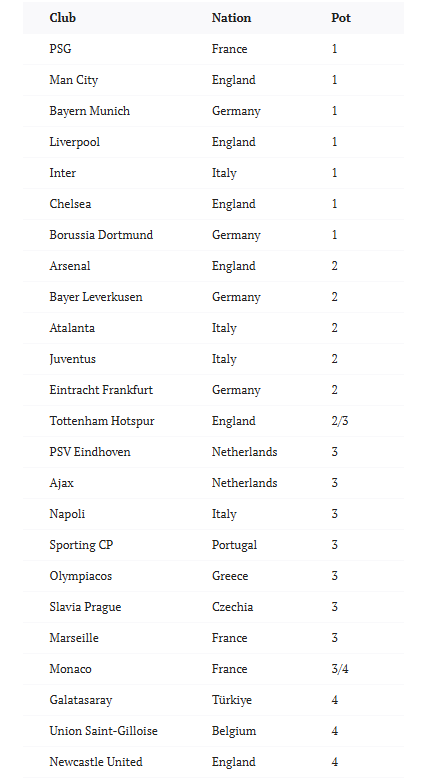
Barcelonas potentiella motståndare i Champions League 2025-26

Sju lag återstår att bekräftas för ligaspelet, varav inget är spanskt. När slutspelet är avklarat kommer Barcelona att ha 31 potentiella motståndare.

Från Pot 1 vet vi att Barcelona inte kommer att möta Real Madrid, men de kommer att lottas mot två av Paris Saint-Germain, Manchester City, Bayern München, Inter Milan, Liverpool, Chelsea och Borussia Dortmund. För närvarande finns det bara fyra bekräftade lag i Pot 2, även om Europa League-mästarna Tottenham Hotspur fortfarande kan ansluta sig. Arsenal är det högst rankade laget i Pot 2, med andra alternativ inklusive Bayer Leverkusen, Atalanta, Juventus och Eintracht Frankfurt.

Eredivisie-storheterna PSV Eindhoven och Ajax toppar tabellen i Pot 3, medan Napoli återvänder till toppen efter att ha vunnit sin andra Serie A-titel på tre år. Sporting Lissabon, som saknar anfallaren Victor Gjorkreis, samt Slavia Prag, Olympiacos, Marseille och Monaco är också potentiella motståndare.

Barcelona undvek en stark Pot 4-motståndare, Athletic Bilbao, men kan möta Newcastle United, Galatasaray eller Union Santiago Bernabéu.

Barcelonas starkaste potentiella motståndare i Champions League 2025-26

Förra säsongen hindrade Inter Milan Barcelona från att nå sin första Champions League-final på ett decennium, men Christian Chivus Nerazzurri är dömda att vara svagare än Simone Inzaghis lag.

Istället föredrar Barcelona Fotbollströja, ​​som senast toppade ligan, att undvika de regerande mästarna Paris Saint-Germain och Premier League-mästarna Liverpool.

Arsenal är det mest imponerande laget i Pot 2, efter att ha visat betydande förbättringar i tävlingen under de senaste två åren. De nådde kvartsfinal 2023-24 och semifinal 2024-25, och strävar efter att ta ytterligare ett steg framåt den här säsongen.

Med tanke på tvivlet kring många Pot 2-lag, inklusive Bayer Leverkusen och Atalanta, kan Tottenham Hotspur vara ett annat lag att undvika. Thomas Franks lag ser ut som en formidabel motståndare för Europas toppklubbar, men deras maxpotential den här säsongen kommer att bero på deras prestationer under de sista dagarna av transferfönstret.

Antonio Contes resultat i Champions League är ganska dåliga, men ingen vill möta Napoli, ett tredjedivisionslag han är manager för. PSV Eindhoven, även om det inte är ett topplag, har lång erfarenhet av tävlingen.

Barcelona skulle inte vara intresserade av att flytta från fjärdedivisionslag till Galatasaray eller Newcastle United.

When history becomes visible on the pitch: Football in West Germany 1990

1. Introduction

The year 1990 was a year of upheaval and hope for West Germany. While the political landscape was dominated by the impending reunification, football provided a platform for national identity, passion, and pride. The players of the West German national team appeared not only with the ball, but also with a symbol of unity and sporting ambition – the iconic 1990 Germany jersey. The pitches of Italy during the World Cup reflected not only sporting excellence, but also the quest of an entire nation for recognition and cohesion. This article examines how football and history were inextricably linked that year and the significance of the jersey and the team for West German society.

2. Historical Context

West Germany in 1990 was at a crucial turning point in its history. The Berlin Wall had fallen a year earlier, and the signs for German reunification were clear. Politically and socially, there was a sense of uncertainty, but also hope for a new era. During this time, football served as a reflection of the social mood: on the streets and in the stadiums, enthusiasm, patriotism, and a collective need for solidarity merged. Football matches became events where people of all ages and backgrounds shared their emotions and experienced a sense of normality and community. The national team not only embodied sporting excellence but also symbolized the cohesion of a nation changing. The year 1990 was thus not only a sporting but also a historical showcase for West Germany’s identity.

3. The 1990 Germany Jersey

The 1990 Germany jersey is more than just a sports kit today—it is a symbol of an era and a historic moment. Designed with clean lines, the classic black, red, and gold stripes on the chest, and a simple yet elegant cut, it reflected both tradition and modernity. For the players, it was a sign of solidarity and identity; for the fans, a tangible symbol of pride and belonging. The jersey was not only worn on the pitch, but also shaped the nation’s collective memory. Every seam and every gradient seemed to reflect the excitement and hope of a country preparing for its great sporting triumph. In Italy’s stadiums, at every kickoff and every goal, the jersey became a visual expression of unity and ambition—a garment that made history visible on the pitch.

4. The National Team in 1990

The West German national team in 1990 was a blend of experience, talent, and tactical finesse. Under the leadership of coach Franz Beckenbauer, the team presented itself as a disciplined unit in which every player knew their role but was also able to react flexibly to game situations. Captain Lothar Matthäus led the midfield with a mixture of determination and strategic flair, while strikers like Rudi Völler and Jürgen Klinsmann scored the decisive goals. The defense, featuring players like Klaus Augenthaler, was characterized by stability and organization. But it wasn’t just the team’s playing strength that shaped the team’s image; personality and team spirit also shaped it. Every player wore the Germany jersey not just as a sportswear item, but as a visible symbol of national identity and collective responsibility. Together, they embodied the self-confidence of a country on the cusp of historic change.

5. The 1990 World Cup in Italy

The 1990 World Cup in Italy was more than just a sporting tournament for West Germany –Cheap Football Shirts​ became a scene of historic drama and national emotion. From the opening match, the team demonstrated its strength, battling through the group stage and mastering difficult knockout matches with nerves of steel and tactical skill. Matches against strong opponents like the Netherlands and England became defining moments, demanding equal amounts of team spirit and individual talent. The Germany jersey, worn by the heroes of these matches, became a symbol of unwavering solidarity. With every goal and every save, the nation, which had been experiencing change for months, grew hope for a tangible sense of success. The final against Argentina was ultimately the climax of a tournament that showcased not only sporting mastery, but also the team’s ability to thrive under pressure and make history. The triumphant victory made the players legends, and the jersey a timeless symbol of West German identity and collective joy.

6. Football as a Mirror of History

Football in West Germany in 1990 was far more than a sport; it reflected the country’s social and political changes. On the pitch, performance, passion, and collective identity merged into a visible expression of national sentiment. The national team embodied not only sporting excellence, but also the pursuit of unity and cohesion in a time of upheaval. The victories, the fans’ cheers, and even the challenges during matches became symbols of hope, commitment, and the longing for a new chapter in the country’s history. The jersey, the team, and the World Cup successes made it clear how closely sport and society are intertwined: Every goal and every triumph reflected the self-confidence of a nation on the path to rewriting its history. Football thus became a mirror reflecting the hopes, fears, and dreams of West Germany.

7. Conclusion

The year 1990 remains a defining chapter in the history of West German football, in which sport and contemporary history were inextricably linked. The national team, clad in the iconic Germany jersey, not only demonstrated sporting mastery but also reflected the social mood of a country in transition. The World Cup in Italy became a symbol of team spirit, cohesion, and national identity, while the jersey itself became a visual symbol of pride and remembrance. Football served as a stage on which history became visible that year—a medium that united people, aroused emotions, and reflected the passage of time on the pitch. In retrospect, it is clear that the sporting triumph of 1990 extends far beyond goals and trophies: It remains a mirror of West German society, its hopes, its successes, and its enduring pride.

Nike Zoom Air Vapor Pro 1 ”Kyler Murray” se lanzará antes de la temporada 2025 de la NFL

Desde audaces homenajes de archivo hasta diseños orientados al rendimiento, la línea continua de botas de fútbol nike air zoom mercurial superfly x elite fg ha combinado estilo y sustancia a lo largo de las temporadas. Ya sea inspirándose en iconos como las Dunk y las DT 96, o enfatizando la tecnología pura en las Vapor Edge Pro 360, cada diseño ha aportado un toque único al campo. Justo a tiempo para la temporada 2025 de la NFL, Nike se prepara para lanzar la nueva entrega del equipo insignia del mariscal de campo de los Arizona Cardinals: las Zoom Air Vapor Pro 1 ”Kyler Murray”.

Estas nuevas botas combinan sobriedad y atractivo. La parte superior está bañada en un suave acabado verde que le da un toque discreto, contrastado por un vívido Swoosh Strike en verde en el mediopié que le da un toque visual más nítido. En la planta del pie, una placa de clavos moldeada perlada completa el look con una sutil iridiscencia.

Las plantillas blancas equilibran la construcción, chaussures de foot adidas f50 mientras que un sistema de tiradores verdes en el talón y la lengüeta facilita su colocación. Tanto las lengüetas como las plantillas llevan estampado el logotipo de atleta de Kyler, lo que le da a la bota un toque personal que evoca la identidad del quarterback en el campo.

Kako dragoceno je klubsko svetovno prvenstvo 2025? Koliko bo Chelsea pridobil, če v finalu premaga Paris Saint-Germain?

Nogometni dresi Chelsea je bil izjemen na poletni seriji klubskega svetovnega prvenstva FIFA 2025 in dosegel briljantne rezultate tako na igrišču kot zunaj njega. Zdaj, po končanem razburljivem finalu, je klub iz zahodnega Londona le korak stran od dviga pokala – in ogromne vsote denarja, ki so jih zaslužili, daleč presegajo celo najprestižnejši evropski turnir.

Medtem ko je pozornost nogometnega sveta usmerjena v to, ali lahko Chelsea premaga evropskega velikana Paris Saint-Germain v finalu na stadionu MetLife v nedeljo, 13. julija, je drugo pereče vprašanje: koliko denarja bodo zaslužili Blues, če bodo šli do konca?

Pod vodstvom glavnega trenerja Enza Maresce je bil Chelsea v novem formatu klubskega svetovnega prvenstva s 32 ekipami stabilen in profesionalen. Premagali so ekipe z vsega sveta, nazadnje so v polfinalu premagali Fluminense, pri čemer je Joao Pedro z dvema goloma zapečatil Chelseajevo uvrstitev v finale.

Pred to tekmo so Modri ​​že zbrali milijone dolarjev nagradnega sklada, saj so dosegli ključne zmage v skupinskem delu, osmini finala in četrtfinalu. Do zmage nad Brazilijo se je skupni nagradni sklad Chelseaja povečal na približno 101,6 milijona dolarjev, do konca pa je ostala še ena tekma.

Ogromen nagradni sklad

Svetovno klubsko prvenstvo, ki prvič poteka v Združenih državah Amerike v razširjenem formatu, ima skupni nagradni sklad v višini 1 milijarde dolarjev, kar je rekord za klubski turnir. Vsaka faza turnirja ponuja večje nagrade, ki spodbujajo ekipe, da gredo čim dlje.

Po poročanju Evening Standarda in drugih britanskih medijev ”skupni nagradni sklad, ki ga lahko ekipa prejme za zmago na turnirju, znaša 116,8 milijona dolarjev (v primerjavi s 123,2 milijona dolarjev) zaradi nihanj menjalnih tečajev”. Vendar pa se bodo dejanski prihodki razlikovali glede na uspešnost ekipe, napredek in vstopnine, ki jih FIFA določi na podlagi ”športnih in komercialnih meril”.

Zmaga v skupinskem delu vredna 1,9 milijona dolarjev
Nagradni sklad žreba skupinskega dela: 952.500 dolarjev
Napredovanje iz skupine: 6,9 milijona dolarjev
Uvrstitev v četrtfinale: 12,1 milijona dolarjev
Uvrstitev v polfinale: 19,3 milijona dolarjev
Uvrstitev v finale: 27,7 milijona dolarjev
Zmaga v finalu: dodatnih 9,5 milijona dolarjev

Če bi Chelsea v finalu premagal Nogometni dresi PSG, bi prejel dodatnih 9,5 milijona dolarjev, s čimer bi se njihovi skupni prihodki od turnirja povečali na približno 111,1 milijona dolarjev.

Developing young talent at RB Leipzig

1. Introduction

RB Leipzig has quickly become one of the most enduring success stories in German football, Cheap Football Shirts and a key factor in this rise are its excellent youth development program. The club has made developing young talent a central part of its strategy, which has produced several top players and strengthened the team’s position in the Bundesliga and on the European stage.

But why is RB Leipzig particularly known for discovering and nurturing young talent? The answer lies in the club’s unique approach, which combines a modern coaching philosophy, a comprehensive academy infrastructure and the resources provided by the Red Bull Group. In this blog, we will delve into RB Leipzig’s methods and explore how it has successfully transformed promising youngsters into star players.

We will also look at concrete examples, such as the careers of Josko Gvardiol and Youssoufa Moukoko, and analyse what factors have enabled them to rise to the top of the international game. We also look at the challenges of youth development in today’s football and how RB Leipzig intends to maintain its leading position in the future.

Suppose you are interested in football tactics, young talent or the inner workings of a top club. In that case, this article will provide you with valuable insights into the RB Leipzig success story!

2. RB Leipzig academy structure

RB Leipzig’s youth system is a carefully planned entity that provides young players with everything they need to start a professional career. The academy structure is based on three key areas: age-group education, high-quality coaching staff and top-class training opportunities.

Age groups and training groups

The academy covers players from the age of 8 right up to the U19 juniors. Each age group has its own coaches and specialized support teams, including fitness coaches, goalkeeping coaches and psychologists. This ensures that each young player receives personal guidance and support throughout their development.

Training methods and philosophy

RB Leipzig focuses on fast, technical and tactical play in youth training. Players are encouraged to be creative and independent decision-makers on the pitch. Training focuses on playmaking, ball handling and situational speed, which reflects the club’s overall style of play. In addition, each age group has its own training program, which ensures that development is continuous and age-appropriate.

Infrastructure and training facilities

The Red Bull Arena and the training center built around it offer young players professional conditions to develop. The pitches are of the highest quality and are constantly maintained in the best possible condition. In addition, the academy has its own gym, analysis facilities supported by the latest technology and a training center, where young players can also focus on their schooling.

Education and life in the academy

RB Leipzig understands that football is not the only thing that young players need to master. That is why the club also offers a training program that helps young people balance their sporting and academic responsibilities. Players who live far from Leipzig can live in the club’s dormitory, which makes their everyday life easier and allows them to focus on training.

In summary, the structure of the RB Leipzig academy is very comprehensive and professional, and it offers young talents everything they need to succeed at the top of football. The club’s focus on youth development is not just a short-term strategy, but a long-term investment that will ensure RB Leipzig’s success in the future.

3. Success stories: RB Leipzig’s graduates become big stars

The success of the RB Leipzig academy cannot be measured solely by its infrastructure or coaching methods – the real measure is how many top players it has managed to raise to the top of the international game. In recent years, several young talents have come through RB Leipzig and become some of the biggest stars in football.

Josko Gvardiol: From defensive gem to world’s most expensive player

Croatian centre-back Josko Gvardiol is one of the clearest examples of RB Leipzig’s ability to develop young talent. He joined the club’s academy in 2020 and quickly rose to become the best defender in the Bundesliga. Guardiola’s strong game intelligence, ball handling skills and physical strength made him one of the most sought-after players in Europe, and his move to Manchester City in 2023 made him one of the most expensive defenders in history.

Youssoufa Moukoko: From young goal scorer to Bundesliga star

Another notable success story is Youssoufa Moukoko, who joined RB Leipzig’s youth system at the age of 17. He quickly became one of the most promising strikers in Germany, and his goalscoring skills and speed made him a key player. Moukoko continued his career at Borussia Dortmund, but RB Leipzig played a crucial role in the early stages of his professional career.

Benjamin Šeško: The RB Leipzig graduate who conquered Europe

Slovenian striker Benjamin Šeško is one of the most exciting up-and-coming players in recent years. He joined RB Leipzig in 2021 and quickly developed into one of the most promising young strikers in Europe. Šeško’s physical strength, leaping ability and goal-scoring ability have made him one of the most dangerous strikers in the Bundesliga.

Why have these players become star players?

RB Leipzig’s confidence in young talent – The club is not afraid to give young players a chance in the professional team.

Personal development plan – Each player has a tailored training program that focuses on their strengths.

High-level competition – Bundesliga and Europa League games offer young players the chance to test their skills against the best.

These success stories show that RB Leipzig is not only a pioneer in youth development, but also one of the best places in Europe for young talent to start their professional careers. In the next decade, we can expect even more star players who have come through the RB Leipzig academy.

4. Coaching philosophy and training methods

RB Leipzig’s success in youth development is no coincidence – it is based on a clear coaching philosophy and innovative training methods that set it apart from many other European academies.

A philosophy that emphasizes game intelligence and quick transitions

The core of RB Leipzig’s coaching philosophy is ”Gegenpressing” (active pressing after losing the ball) and fast counterattacking play. This is already evident in youth training:

Players are taught to react quickly to losses of the ball

Focus on short and precise passes

Development of offensive reasoning in situations where the opponent is disorganized

Technology integrated into training

RB Leipzig makes extensive use of modern technologies in youth development:

Video reviews: Every training session is recorded and analyzed in detail

GPS devices: Players’ movements and workload are monitored in real time

Data analytics: Machine learning algorithms help identify areas for development

Mental education and self-esteem

Special attention is paid to the mental strength of young people:

Regular sessions with a psychologist

Mentoring by more experienced players

Normalization of failures as part of development

Individual development path

A personal development plan is created for each player, which includes:

Weaknesses Targeting

Specialization in a specific playing position

Monitoring physical development

Training rhythms and rest

The training program is scientifically designed:

6 training days a week

Emphasis on rest and recovery

Diet and quality sleep are part of the training program

RB Leipzig’s coaching methods combine the rigor of traditional German football with the use of modern knowledge and technology. This holistic approach ensures that young players not only develop into technically skilled players, but also intelligent and adaptable footballers who are able to thrive in modern competitive football.

This systematic approach is key to the club’s ability to consistently produce top players and explains why the RB Leipzig academy has become one of the most respected youth systems in Europe.

5. Challenges and future prospects

RB Leipzig’s youth development program has experienced significant success, but it also has challenges and new opportunities in the future.

Biggest challenges

Competition with other top clubs

Bayern Munich, Borussia Dortmund and other Bundesliga clubs have increased their investments in their youth systems.

International giants (e.g. Manchester City, Barcelona, ​​PSG) attract talented youngsters with high salaries.

Retaining players

When young players develop into top performers, they are often sold to big clubs (e.g. Josko Guardiola’s move to Manchester City).

RB Leipzig must find a balance between financial gain and long-term team building.

The changing world of football

Technological developments (e.g. artificial intelligence, virtual training) are changing the way young players are trained.

Football tactics are evolving rapidly, and the academy must keep up with the times.

Future prospects and strategies

Encouraging long-term commitment

RB Leipzig can offer promising young players better contracts and a clearer career path.

For example, Benjamin Šeško has been given the opportunity to develop into a key player without an immediate transfer.

Cooperation with the Red Bull network

RB Leipzig can leverage Red Bull’s global network (e.g. RB Salzburg, New York Red Bulls) for loan deals for young players.

This gives young players experience in different leagues and increases their market value.

Investment in technology and expansion of the academy

More advanced training equipment (e.g. VR simulators, AI analysis).

A wider network of talent scouts around the world.

Emphasis on versatility and mental toughness

The mental well-being of young players is more important than ever.

RB Leipzig can lead the way by offering more comprehensive psychological support.

Conclusion: The role of the RB Leipzig academy in the future

Despite the challenges, RB Leipzig has all the prerequisites to maintain its position as one of the best youth systems in Europe. The club’s ability to combine modern coaching, technology and a long-term strategy is what makes it special.

In the future, RB Leipzig can either focus on being a “sales factory” or aim to build a team that can compete in the Champions League with its own graduates. Which path is chosen depends on the visionary leadership of the club.

One thing is certain, however: the importance of the RB Leipzig academy in developing young football stars is only going to grow.

6. Conclusion

RB Leipzig’s youth development program has proven that success does not happen by chance – it is the result of a carefully planned strategy and long-term work. The club’s ability to combine modern coaching, top-class infrastructure and individual guidance of young talents has made it one of the most respected academies in Europe.

In the future, RB Leipzig must continue to develop innovative methods, as the world of football is constantly changing. Utilizing technology, supporting mental well-being and expanding global talent scouting are key if the club wants to maintain its position as a trainer of young stars.

If you are interested in RB Leipzig’s kits or want to support the club, you can check out the fan products at wcfootballkits.co.uk.

The RB Leipzig story is proof that investing in youth development is not only an investment in the future of the team, but also in the success of German football as a whole. Over the next decade, we can expect to see even more RB Leipzig graduates conquering the top of the game.
Developing young talent at RB Leipzig

1. Introduction

RB Leipzig has quickly become one of the most enduring success stories in German football, Cheap Football Shirts and a key factor in this rise are its excellent youth development program. The club has made developing young talent a central part of its strategy, which has produced several top players and strengthened the team’s position in the Bundesliga and on the European stage.

But why is RB Leipzig particularly known for discovering and nurturing young talent? The answer lies in the club’s unique approach, which combines a modern coaching philosophy, a comprehensive academy infrastructure and the resources provided by the Red Bull Group. In this blog, we will delve into RB Leipzig’s methods and explore how it has successfully transformed promising youngsters into star players.

We will also look at concrete examples, such as the careers of Josko Gvardiol and Youssoufa Moukoko, and analyse what factors have enabled them to rise to the top of the international game. We also look at the challenges of youth development in today’s football and how RB Leipzig intends to maintain its leading position in the future.

Suppose you are interested in football tactics, young talent or the inner workings of a top club. In that case, this article will provide you with valuable insights into the RB Leipzig success story!

2. RB Leipzig academy structure

RB Leipzig’s youth system is a carefully planned entity that provides young players with everything they need to start a professional career. The academy structure is based on three key areas: age-group education, high-quality coaching staff and top-class training opportunities.

Age groups and training groups

The academy covers players from the age of 8 right up to the U19 juniors. Each age group has its own coaches and specialized support teams, including fitness coaches, goalkeeping coaches and psychologists. This ensures that each young player receives personal guidance and support throughout their development.

Training methods and philosophy

RB Leipzig focuses on fast, technical and tactical play in youth training. Players are encouraged to be creative and independent decision-makers on the pitch. Training focuses on playmaking, ball handling and situational speed, which reflects the club’s overall style of play. In addition, each age group has its own training program, which ensures that development is continuous and age-appropriate.

Infrastructure and training facilities

The Red Bull Arena and the training center built around it offer young players professional conditions to develop. The pitches are of the highest quality and are constantly maintained in the best possible condition. In addition, the academy has its own gym, analysis facilities supported by the latest technology and a training center, where young players can also focus on their schooling.

Education and life in the academy

RB Leipzig understands that football is not the only thing that young players need to master. That is why the club also offers a training program that helps young people balance their sporting and academic responsibilities. Players who live far from Leipzig can live in the club’s dormitory, which makes their everyday life easier and allows them to focus on training.

In summary, the structure of the RB Leipzig academy is very comprehensive and professional, and it offers young talents everything they need to succeed at the top of football. The club’s focus on youth development is not just a short-term strategy, but a long-term investment that will ensure RB Leipzig’s success in the future.

3. Success stories: RB Leipzig’s graduates become big stars

The success of the RB Leipzig academy cannot be measured solely by its infrastructure or coaching methods – the real measure is how many top players it has managed to raise to the top of the international game. In recent years, several young talents have come through RB Leipzig and become some of the biggest stars in football.

Josko Gvardiol: From defensive gem to world’s most expensive player

Croatian centre-back Josko Gvardiol is one of the clearest examples of RB Leipzig’s ability to develop young talent. He joined the club’s academy in 2020 and quickly rose to become the best defender in the Bundesliga. Guardiola’s strong game intelligence, ball handling skills and physical strength made him one of the most sought-after players in Europe, and his move to Manchester City in 2023 made him one of the most expensive defenders in history.

Youssoufa Moukoko: From young goal scorer to Bundesliga star

Another notable success story is Youssoufa Moukoko, who joined RB Leipzig’s youth system at the age of 17. He quickly became one of the most promising strikers in Germany, and his goalscoring skills and speed made him a key player. Moukoko continued his career at Borussia Dortmund, but RB Leipzig played a crucial role in the early stages of his professional career.

Benjamin Šeško: The RB Leipzig graduate who conquered Europe

Slovenian striker Benjamin Šeško is one of the most exciting up-and-coming players in recent years. He joined RB Leipzig in 2021 and quickly developed into one of the most promising young strikers in Europe. Šeško’s physical strength, leaping ability and goal-scoring ability have made him one of the most dangerous strikers in the Bundesliga.

Why have these players become star players?

RB Leipzig’s confidence in young talent – The club is not afraid to give young players a chance in the professional team.

Personal development plan – Each player has a tailored training program that focuses on their strengths.

High-level competition – Bundesliga and Europa League games offer young players the chance to test their skills against the best.

These success stories show that RB Leipzig is not only a pioneer in youth development, but also one of the best places in Europe for young talent to start their professional careers. In the next decade, we can expect even more star players who have come through the RB Leipzig academy.

4. Coaching philosophy and training methods

RB Leipzig’s success in youth development is no coincidence – it is based on a clear coaching philosophy and innovative training methods that set it apart from many other European academies.

A philosophy that emphasizes game intelligence and quick transitions

The core of RB Leipzig’s coaching philosophy is ”Gegenpressing” (active pressing after losing the ball) and fast counterattacking play. This is already evident in youth training:

Players are taught to react quickly to losses of the ball

Focus on short and precise passes

Development of offensive reasoning in situations where the opponent is disorganized

Technology integrated into training

RB Leipzig makes extensive use of modern technologies in youth development:

Video reviews: Every training session is recorded and analyzed in detail

GPS devices: Players’ movements and workload are monitored in real time

Data analytics: Machine learning algorithms help identify areas for development

Mental education and self-esteem

Special attention is paid to the mental strength of young people:

Regular sessions with a psychologist

Mentoring by more experienced players

Normalization of failures as part of development

Individual development path

A personal development plan is created for each player, which includes:

Weaknesses Targeting

Specialization in a specific playing position

Monitoring physical development

Training rhythms and rest

The training program is scientifically designed:

6 training days a week

Emphasis on rest and recovery

Diet and quality sleep are part of the training program

RB Leipzig’s coaching methods combine the rigor of traditional German football with the use of modern knowledge and technology. This holistic approach ensures that young players not only develop into technically skilled players, but also intelligent and adaptable footballers who are able to thrive in modern competitive football.

This systematic approach is key to the club’s ability to consistently produce top players and explains why the RB Leipzig academy has become one of the most respected youth systems in Europe.

5. Challenges and future prospects

RB Leipzig’s youth development program has experienced significant success, but it also has challenges and new opportunities in the future.

Biggest challenges

Competition with other top clubs

Bayern Munich, Borussia Dortmund and other Bundesliga clubs have increased their investments in their youth systems.

International giants (e.g. Manchester City, Barcelona, ​​PSG) attract talented youngsters with high salaries.

Retaining players

When young players develop into top performers, they are often sold to big clubs (e.g. Josko Guardiola’s move to Manchester City).

RB Leipzig must find a balance between financial gain and long-term team building.

The changing world of football

Technological developments (e.g. artificial intelligence, virtual training) are changing the way young players are trained.

Football tactics are evolving rapidly, and the academy must keep up with the times.

Future prospects and strategies

Encouraging long-term commitment

RB Leipzig can offer promising young players better contracts and a clearer career path.

For example, Benjamin Šeško has been given the opportunity to develop into a key player without an immediate transfer.

Cooperation with the Red Bull network

RB Leipzig can leverage Red Bull’s global network (e.g. RB Salzburg, New York Red Bulls) for loan deals for young players.

This gives young players experience in different leagues and increases their market value.

Investment in technology and expansion of the academy

More advanced training equipment (e.g. VR simulators, AI analysis).

A wider network of talent scouts around the world.

Emphasis on versatility and mental toughness

The mental well-being of young players is more important than ever.

RB Leipzig can lead the way by offering more comprehensive psychological support.

Conclusion: The role of the RB Leipzig academy in the future

Despite the challenges, RB Leipzig has all the prerequisites to maintain its position as one of the best youth systems in Europe. The club’s ability to combine modern coaching, technology and a long-term strategy is what makes it special.

In the future, RB Leipzig can either focus on being a “sales factory” or aim to build a team that can compete in the Champions League with its own graduates. Which path is chosen depends on the visionary leadership of the club.

One thing is certain, however: the importance of the RB Leipzig academy in developing young football stars is only going to grow.

6. Conclusion

RB Leipzig’s youth development program has proven that success does not happen by chance – it is the result of a carefully planned strategy and long-term work. The club’s ability to combine modern coaching, top-class infrastructure and individual guidance of young talents has made it one of the most respected academies in Europe.

In the future, RB Leipzig must continue to develop innovative methods, as the world of football is constantly changing. Utilizing technology, supporting mental well-being and expanding global talent scouting are key if the club wants to maintain its position as a trainer of young stars.

If you are interested in RB Leipzig’s kits or want to support the club, you can check out the fan products at wcfootballkits.co.uk.

The RB Leipzig story is proof that investing in youth development is not only an investment in the future of the team, but also in the success of German football as a whole. Over the next decade, we can expect to see even more RB Leipzig graduates conquering the top of the game.